Buying a used car is one of the smartest ways to own a vehicle in India. A three-year-old car can cost 30 to 40 percent less than a new one, yet still give you years of reliable service. The catch is that a used car also carries risk. A car that looks clean on the outside can hide accident damage, a worn-out engine, or pending fines and loans. A careful inspection and the right paperwork make all the difference. Here is a step-by-step guide.
1. Decide Your Budget and the Right Car for You
Before you start browsing listings, fix a realistic budget. A good rule is to keep the total cost — car price, insurance, transfer charges, and first service — within your limit, not just the sticker price. For example, if your budget is Rs. 5 lakh, look at cars priced around Rs. 4.5 lakh so that you have room for the rest.
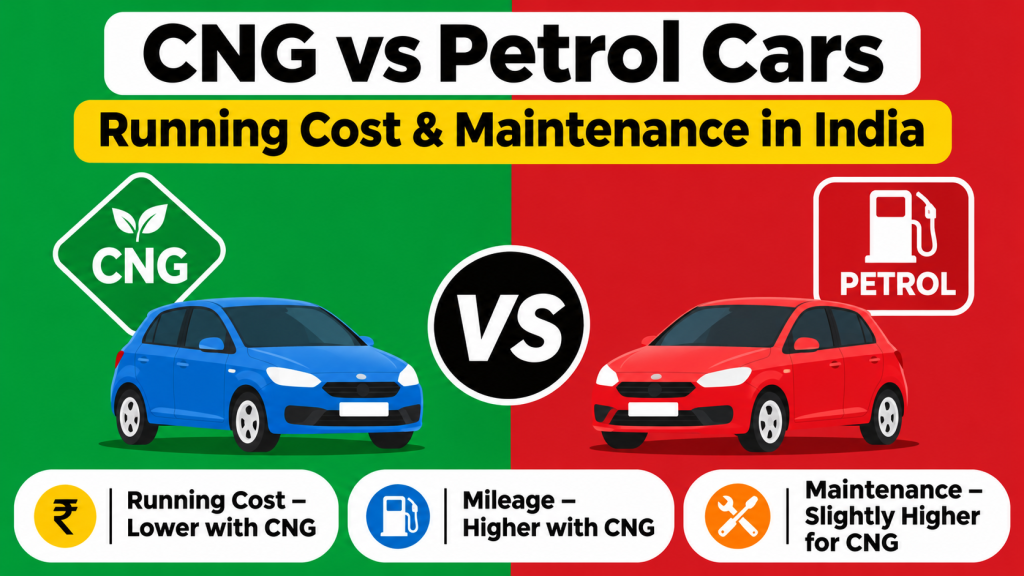
Next, decide what you actually need. A hatchback like a Maruti Swift or Hyundai Grand i10 makes sense for city driving and easy parking. A compact SUV such as a Maruti Brezza or Hyundai Venue suits families and highway trips. Think about your daily running too. If you drive less than 1,000 km a month, a petrol car is usually cheaper overall. Diesel makes sense only for high running, and CNG works well if you have filling stations nearby.
Shortlist two or three models instead of falling in love with one car, so you can walk away from a bad deal.
2. Where to Buy: Dealer, Online Platform or Direct Owner
Buying directly from an owner is usually cheapest, but you get no warranty and must handle all paperwork yourself. Organised dealers and platforms like Cars24, Spinny and OLX Autos charge more but offer inspection reports, a short warranty, and help with RC transfer. For first-time buyers, a reputed platform or dealer is safer.
Whichever route you take, compare the asking price with the market value. Check similar cars of the same model, year and city on two or three listing websites. If a car is priced far below the market, be suspicious — it may have hidden problems or pending dues.
3. The Inspection Checklist: What to Check Before You Pay
Never buy a car without seeing it in daylight and taking a test drive. Carry this checklist with you.
Outside the car: Look at the body panels in bright light. Uneven gaps between doors, mismatched paint shades, or overspray on rubber seals suggest accident repair. Check all four tyres for even wear; uneven wear can point to suspension or alignment problems.
Under the bonnet: Open the bonnet and check the engine oil on the dipstick. Clean amber oil is good; thick black sludge is a warning sign. Look for oil leaks around the engine and check the coolant level. Start the engine and listen for knocking, rattling, or excessive vibration. Blue or white smoke from the exhaust means the engine is burning oil or coolant — walk away.
Inside the car: Test every switch — headlights, indicators, wipers, power windows, air conditioning, and the infotainment system. A very worn steering wheel or pedals on a low-odometer car can mean the odometer has been tampered with.
The test drive: Drive for at least 15 to 20 minutes, on city roads and a faster stretch. The car should accelerate smoothly, brake in a straight line, and not pull to one side. Listen for squealing brakes or clunking sounds over bumps. Test the gears — a manual gearbox should shift without grinding, and an automatic should change gears without jerks.
If you are not confident about judging a car yourself, pay a trusted local mechanic Rs. 500 to Rs. 1,500 for a pre-purchase inspection. It is the best money you will spend in the whole deal.
4. Check the Documents Carefully
A car without clean papers is not a bargain at any price. Ask for these documents and verify each one:
- Registration Certificate (RC): Check the seller’s name matches the RC, and whether the car is on loan. If hypothecated to a bank, the loan must be closed and the hypothecation removed before transfer.
- Insurance: It should be valid, ideally comprehensive. Check the IDV (Insured Declared Value) and no-claim bonus.
- Pollution Under Control (PUC) certificate: It must be current.
- Service history: A car serviced at authorised centres with a stamped service book is worth more than one with no records.
- Challans and dues: Check pending traffic challans on the Parivahan website using the registration number. Unpaid challans and FASTag dues transfer to you along with the car.
Verify the chassis and engine numbers on the car against the RC — they must match exactly. Also check the RC on the Parivahan portal to confirm the owner and that the vehicle is not blacklisted or stolen.
5. Negotiating the Price
Used car prices are almost always negotiable. Start by knowing the market value of the exact model, year and variant in your city. Then use every genuine issue you found — worn tyres, a pending service, minor scratches, or a short insurance term — as a reason to ask for a reduction. A fair target is 5 to 10 percent below the asking price for a clean car, and more if repairs are needed.
Stay polite but firm, and be ready to walk away — there are lakhs of used cars for sale. Never pay the full amount before the paperwork is done. A small token advance of Rs. 5,000 to Rs. 10,000 with a written receipt is reasonable; pay the balance only when the documents are signed.
6. Closing the Deal: Payment and RC Transfer
Pay by bank transfer or cheque, not cash beyond a small token, so there is a clear payment trail. Get a written sale agreement and a signed delivery note with the date and time of handover.
The RC transfer (Form 29 and Form 30) must be filed with the RTO within 14 days of the sale. The buyer is responsible for the transfer, though dealers and platforms usually handle it for a fee. Until the RC is in your name, the previous owner remains legally responsible for the car — and you remain exposed. Track the transfer status on the Parivahan portal and follow up until it is complete. Also transfer the insurance policy to your name immediately, since a policy in the old owner’s name will not cover you.
Common Mistakes to Avoid
- Buying at night or in a hurry without a test drive.
- Trusting the odometer reading alone — service records matter more.
- Ignoring the cost of insurance, transfer, and immediate repairs.
- Buying a car with a pending loan or a duplicate RC.
- Skipping the mechanic’s inspection to save a small fee.
Final Word
A used car can be excellent value if you buy with patience and a checklist: fix your budget, shortlist the right model, inspect in daylight, verify every document, and negotiate with facts, not emotion. A little money on a mechanic’s opinion and a little time on paperwork will keep your car serving you well for years — without the new-car price tag.