The first cold night in North and Central India brings the same question to thousands of homes: which room heater should we buy? The wrong choice is easy to make. A fan blower can dry your throat when run all evening, a quartz heater warms only what sits in front of it, and an oil-filled radiator takes time to heat a room. The right heater depends on your room size, how many hours you will run it, and who will be in the room.
This buying guide compares the main heater types sold in India, explains how to match wattage to your room, and lists the safety features you should insist on. It does not rank specific models, because prices and stock change quickly. Use these criteria to shortlist models, then confirm current price and specifications with the seller or manufacturer.
The Four Heater Types, Explained Simply
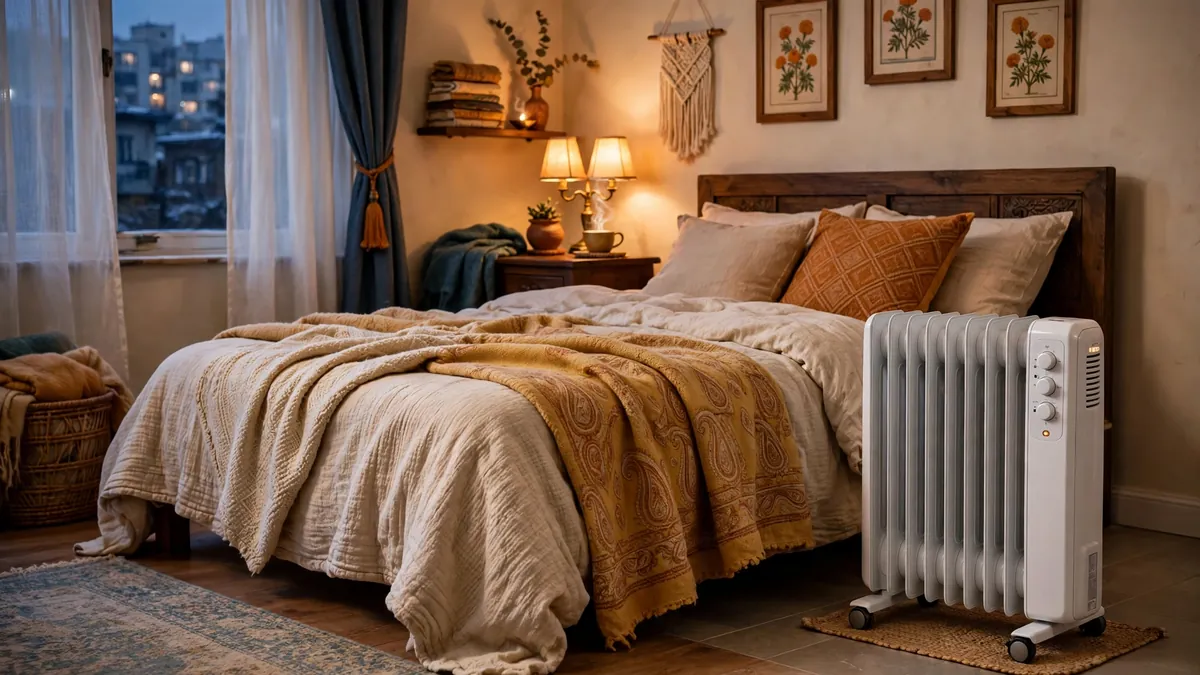
Oil-filled radiators, or OFRs, heat oil sealed inside metal fins. The fins give off gentle, silent warmth for hours, and a thermostat holds the room temperature steady. Because there is no glowing element or hot-air blast, OFRs suit bedrooms and long evenings, including rooms with elderly family members. Their weakness is speed: they take a while to warm a cold room, and they cost more upfront.
Fan heaters and blowers push hot air with a fan, so the room feels warmer within minutes. They suit short use, such as warming a room while dressing or studying. Run for hours, they can feel noisy and drying. PTC ceramic heaters are a better class of blower: the ceramic element self-regulates better than an exposed coil and is generally preferred where safety matters.
Quartz and halogen heaters glow and warm whatever faces them, like sunlight. They are cheap and instant for personal use at a desk, but they barely warm the whole room’s air. Keep them furthest from bedding, curtains and children.
Match Wattage to Your Room Size
A common rule of thumb is about 10 watts per square foot for a standard closed room. A 200 square foot bedroom needs roughly 2,000 watts; an 800-watt quartz heater is a personal heater, not a room heater. Rooms with high ceilings, large windows, or gaps under doors lose heat faster, so size up slightly.
For OFRs, fin count matters. A small room can manage with fewer fins, while a master bedroom usually needs an 11-fin or 13-fin model. An undersized heater runs constantly without warming the room, and an oversized heater without a thermostat wastes electricity.
Insist on a Thermostat and Safety Switches
A thermostat is the single most valuable feature. Without one, the heater runs at full power until you switch it off, overheating small rooms and wasting units. With one, the heater cuts out at your set temperature and uses no power while it waits.
Look for three safety features: a tip-over switch that cuts power if the heater falls, an overheat cut-out that trips if airflow is blocked, and a cool-touch body where hands naturally go. These matter most in homes with children, elderly parents and pets.
Placement is part of safety. Keep heaters away from bedding, curtains, clothes and furniture, place them on a stable flat surface, and never dry clothes on a heater. Plug high-wattage heaters into a proper wall socket, not a thin extension board, and avoid running another heavy appliance on the same line.
Understand the Electricity Cost Before Buying
Heater running cost follows a simple formula: units consumed equals wattage divided by 1,000, multiplied by hours used. A 2,000-watt heater running continuously for three hours uses about 6 units. A thermostat reduces real consumption because the heater does not run at full power the whole time.
This is why usage hours decide the right type. For twenty minutes of quick warmth, a blower is economical. For six hours every night, an OFR with a thermostat usually gives steadier comfort with controlled consumption. Before buying, estimate your nightly hours and multiply by your electricity tariff to see the monthly impact.
Which Heater for Which Home?
Choose an OFR if the heater will run in a bedroom for hours, especially with a baby or elderly parent in the room. Choose a PTC ceramic blower for quick warmth in a small to medium room with better safety than a basic coil blower. Choose a basic fan heater only for short bursts in small rooms. Choose quartz or halogen only as a personal spot heater at a desk, kept well away from fabrics.
If your city gets only a few cold weeks a year, an expensive OFR may not be worth it. If December and January nights are severe where you live, the OFR’s comfort and safety justify its price over several winters.
Winter expenses also test your household budget. HighLocus’s guide on how to build an emergency fund in India helps plan seasonal costs, and gadget buyers can compare our best laptops under ₹50,000 for students buying criteria approach before any big purchase.
FAQ
Which room heater is best for a bedroom?
An oil-filled radiator with a thermostat is usually best for bedrooms because it gives silent, steady heat for hours. Match the fin count and wattage to your room size.
How much electricity does a 2000W heater use?
Running continuously, it uses about 2 units per hour. With a thermostat, actual use is lower because the heater cycles on and off to hold temperature.
Is a fan heater safe to run overnight?
For overnight use, an OFR with thermostat, tip-over switch and overheat protection is the safer choice. Follow the manufacturer’s instructions and keep any heater away from bedding.
What size heater do I need for a 12×12 room?
A 144 square foot room needs roughly 1,400 to 1,500 watts by the 10-watts-per-square-foot rule. Size up slightly if the room is draughty or has a high ceiling.
Conclusion
Buy a room heater by room size, hours of use and safety features, not by the biggest discount. OFRs suit long bedroom use, PTC blowers suit quick warmth, and quartz heaters suit personal spot heating only. Insist on a thermostat and safety switches, estimate the electricity cost honestly, and confirm current prices and specifications before ordering. A heater chosen this way will keep your family warm without shocking your winter bill.
Note: Prices, models and specifications change frequently. This guide explains buying criteria only; verify current details with the manufacturer or seller, and follow the product manual for safe use.